
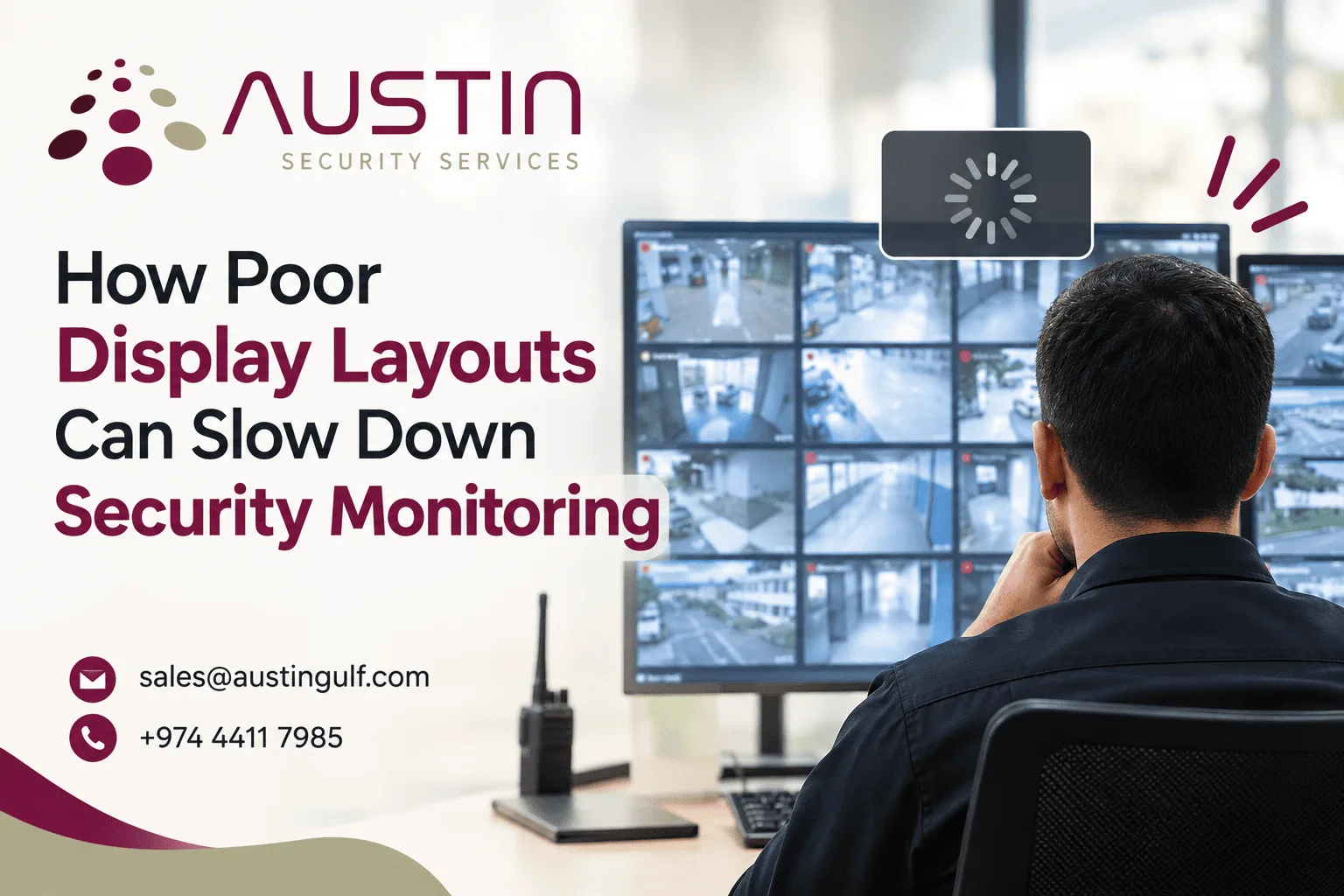
How Poor Display Layouts Can Slow Down Security Monitoring
A modern security control room may have high resolution cameras, advanced surveillance software, and reliable recording systems. But if the display layout is poorly planned, all that technology can become harder to use effectively.
Security monitoring is not simply about displaying as many camera feeds as possible. The way those feeds are arranged can influence how quickly an operator notices unusual activity, follows an incident, or checks what is happening in another area.
Too Many Feeds Can Make Important Details Easy to Miss
Displaying dozens of camera feeds at the same size may seem like an efficient way to monitor a facility. In practice, however, very small feeds can make visual details difficult to identify.
An operator may need to constantly scan across multiple screens to notice movement, a person entering a restricted area, or activity around an important access point.
A better layout gives greater visibility to cameras that require regular attention while keeping supporting feeds available when needed.
Related Cameras Should Be Easy to Find
Consider an incident near a building entrance. The operator may need to check the entrance, reception area, nearby corridor, parking area, and access point to understand what happened.
If these camera feeds are spread across different screens, finding them can take additional time.
Grouping related camera views according to location or function can make monitoring more practical. Operators can move between relevant views without searching through an entire video wall.
Screen Size Also Matters
A high resolution camera cannot solve every display problem.
When a camera feed is reduced to a very small window, details such as faces, vehicle numbers, access activity, or movement in a particular area may become difficult to distinguish.
This is why camera resolution, screen size, viewing distance, and the number of feeds displayed together should be considered during AV planning.
Constant Screen Changes Can Cause Confusion
Some control rooms use rotating camera views to display more feeds than can fit on the available screens. While this can be useful in certain situations, excessive switching may make continuous monitoring difficult.
An important view could disappear just when an operator needs to observe it. The operator may then have to wait for the feed to return or search for it manually.
Critical camera feeds should therefore remain easily accessible, while less important views can be displayed when required.
The Physical Arrangement of Screens Matters Too
Display layout is not only about where each camera feed appears on the screen.
The physical position of the displays also affects the monitoring experience. Glare, reflections, unsuitable screen height, poor viewing angles, and excessive brightness can make prolonged monitoring uncomfortable.
Control room displays should be positioned according to where operators actually sit and work. A video wall that looks impressive from outside the control room may not necessarily be practical for the people using it every day.
Plan for the Operator, Not Just the Equipment
A good security monitoring setup should be designed around how information will actually be used.
Before installing displays, it is important to consider:
- How many feeds need to be viewed simultaneously?
- Which locations require continuous monitoring?
- Which camera views need greater visibility?
- How far will operators sit from the screens?
- Will more cameras be added in the future?
- How quickly can related camera views be accessed during an incident?
These considerations can help create a display arrangement that supports faster and clearer monitoring.
Better AV Planning Can Improve the Monitoring Environment
The purpose of a control room video wall is not simply to fill a wall with screens. It should help operators understand what is happening across a facility without unnecessary visual searching.
Professional AV planning brings together display size, video walls, signal distribution, screen positioning, viewing distance, and future expansion requirements.
When these elements are planned together, security teams can work with their surveillance information in a more organised and practical environment.
Good security monitoring depends on more than cameras and recording systems. The way camera information is displayed can also influence how quickly operators identify and respond to what they see.
A well planned display layout can reduce visual clutter, keep important views accessible, and make related camera feeds easier to follow.
For modern control rooms, the right AV design is not about displaying more information. It is about presenting the right information in a way that operators can use effectively.


